Independently led the ideation and development of a project to improve the complex experience of managing deceased estates, under the mentorship of a senior designer. From discovery to final recommendations, I conducted in-depth research, identified user pain points, and developed innovative solutions to streamline the process for both customers and staff, enhancing efficiency and user satisfaction.
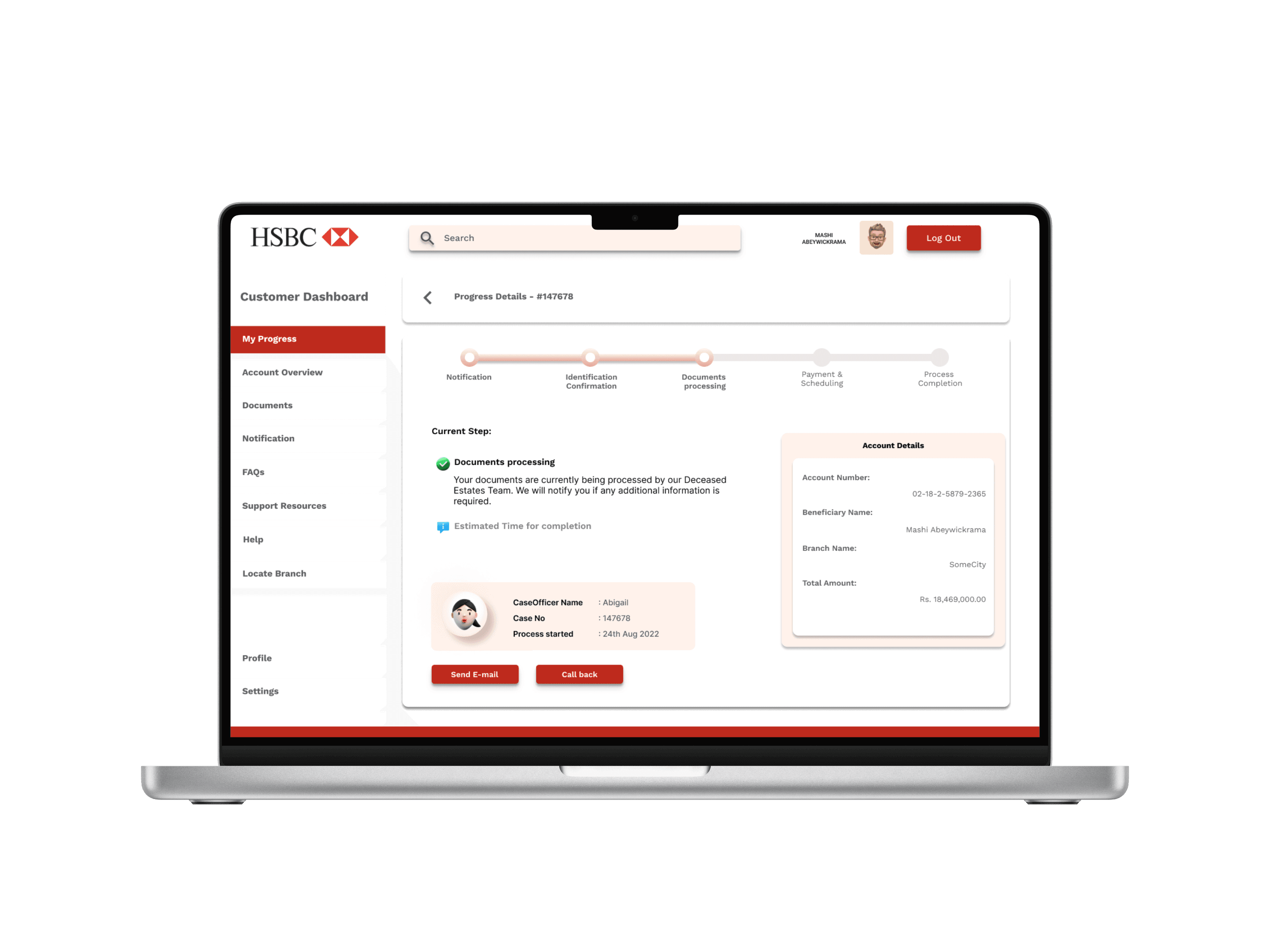
This mockup illustrates the proposed customer portal, designed to streamline estate management processes
My role
UX Researcher
Company
HSBC
Industry
Finance
Timeline
May 2024 - July 2024
Key problems to solve
Confusion in user journeys
Customers and their proxies struggle to navigate the complex and fragmented online and offline processes of managing deceased estates, leading to frustration and delays.
Lack of Support for Frontline Staff
Frontline staff face inefficiencies due to disjointed systems, scattered information, and manual processes, making it harder to provide timely support to customers.
Inadequate Emotional Sensitivity
The current process lacks compassion, failing to provide customers with the emotional sensitivity and personalized guidance needed during a difficult time.
Challenges I encountered…
Balancing Empathy with Functionality
Designing an interface that is both supportive and functional during an emotionally sensitive time was challenging. It required finding the right balance between offering clear, practical information and maintaining a compassionate tone throughout the user journey.
Simplifying a Complex, Multi-step Process
The deceased estate process involves numerous steps and documents, making it difficult to streamline the user experience without losing important details. You had to ensure that the process remained efficient while providing users with guidance at every step.
Integrating Online and Offline Touchpoints
Bridging the gap between online and offline processes—such as in-branch visits and document submissions—was challenging. Creating a seamless experience that connected these touchpoints required careful coordination between both digital and physical interactions.
Results…
Customer satisfaction increased as the average settlement time dropped from 16 weeks to 8 weeks. This user-centered solution not only enhanced efficiency but also reduced frustration for customers and their proxies during a difficult time.
HSBC conducted internal reviews and data analysis to measure improvements. They tracked settlement times using system records and assessed staff satisfaction through pre- and post-implementation surveys, showing a 25% increase in satisfaction.
50%
Reduced settlement time
25%
Increased frontline staff satisfaction increased
Delving deeper into the process…
Creating the Research Plan
I created this plan in, aligning with HSBC’s business goals:
What challenges do customers face when they try to go through the process of managing the deceased estates through HSBC website?
How can we make the process easier and more supportive for deceased estate customers?
What are the expectations and needs of customers navigating this difficult time?
How can we support HSBC frontline staff in handling these cases more efficiently and compassionately?
Methodology
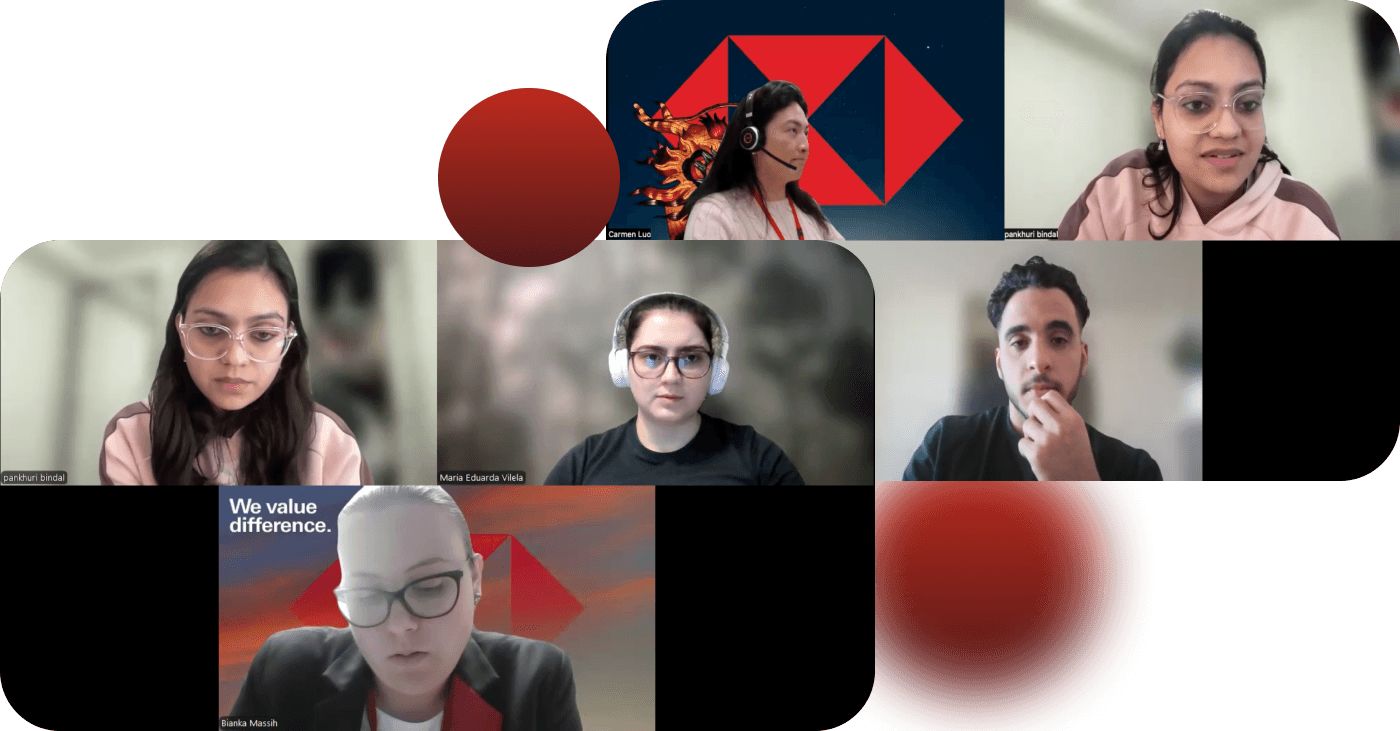
I have utilized a comprehensive research approach that combines qualitative research methods(semi-structured interviews with 3 customer advocacy manager HSBC and 3 customer service managers), competitive analysis, and extensive desktop research.
I chose hour long semi-structured interviews for the following reasons:
💡Open ended questions allow for attitudinal insights & in-depth discovery. The length of the interview could be split into stages with different focuses
💡Given that customers infrequently use HSBC’s bereavement page, our research included a thorough analysis of institutions that demonstrate best practices in managing bereavement pages. This approach provided valuable insights and informed our suggestions for enhancing HSBC's bereavement page.
💡Insights from the Banking Code Compliance Committee (BCCC) report, published in June 2023, which examined the practices of six banks in managing deceased estates, were also considered. This approach gave us a panoramic view of the entire process of managing deceased estates, providing valuable insights and informing our suggestions for enhancing Deceased Estates process.
Synthesis - Cutting through to find insights…
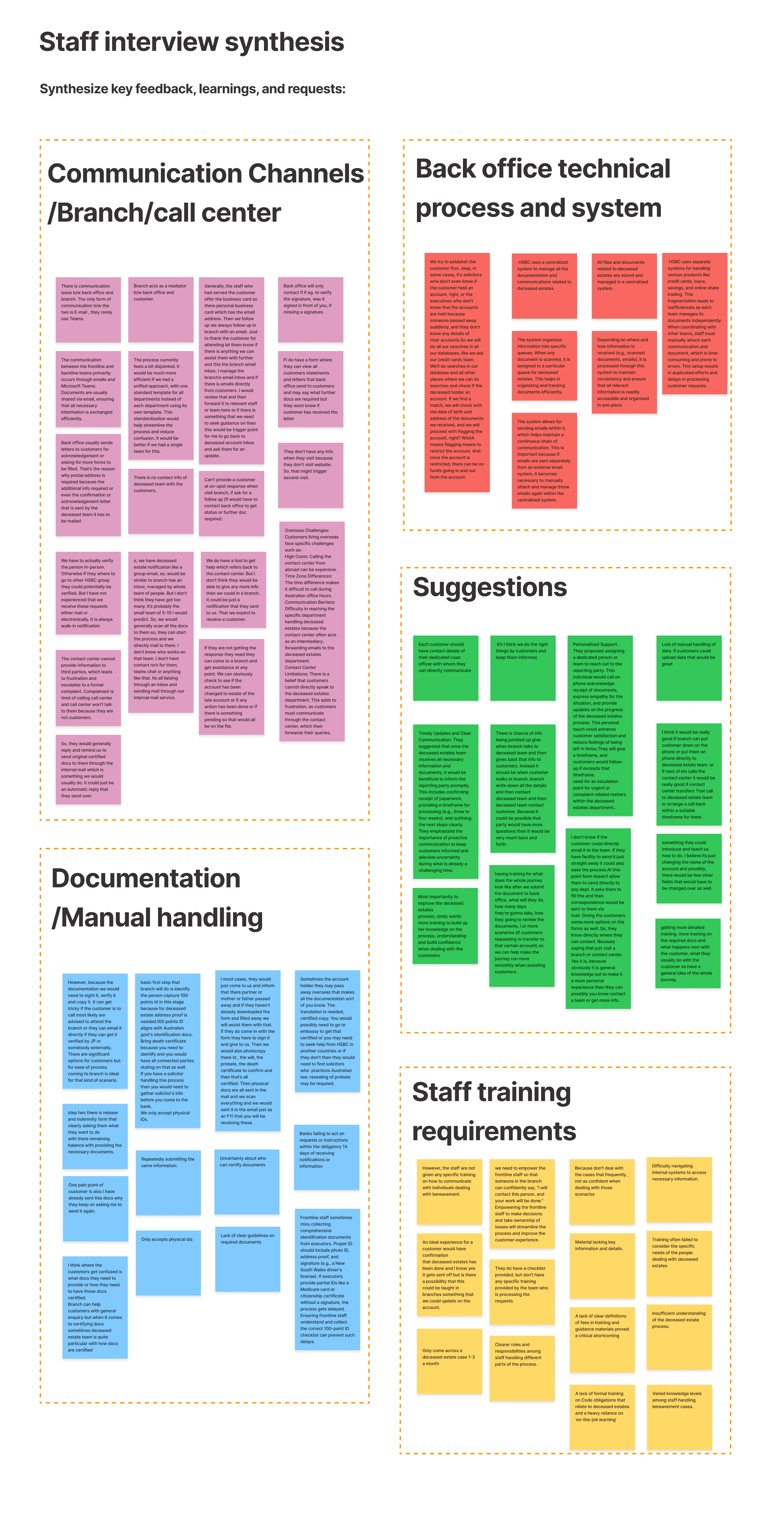
Affinity Mapping
The synthesis stage involved a process of categorizing user profile responses with common themes:
All findings and quotes from interviews were imported into miro, sorted by insights and and colour coded by target user group.
Barriers and Pain Points Of each group were identified, with direct quotes as evidence for every theme.
The findings analyzed were explored further to group under five key themes.
Customer Advocacy Manager
The process currently feels a bit disjointed. It would be much more efficient if we had a unified approach, with one standard template for all departments instead of each department using its own template. This standardization would help streamline the process and reduce confusion. It would be better if we had a single team for this.

“

“
Customer Service Manager
We have to actually verify the person in-person. Otherwise if they where to go to other HSBC group they could potentially be verified. But I have not experienced that we receive these requests either mail or electronically. It is always walk-in notification.
We do have a tool to get help which refers back to the contact center. But I don’t think they would be able to give any more info then we could in a branch.
Customer Service Manager
Because frontline don't deal with the cases that frequently , staff not as confident when dealing with those scenarios.
“

Screenshot of the synthesis board from Miro
key insights…
Lack of a Unified System
There is no centralized deceased estates team; instead, various departments handle different scenarios. This lack of a unified system leads to fragmented communication and coordination issues among different teams.
Manual Data Handling and Documentation Complexity
The process of managing deceased estates requires customers to present physical documents, such as 100 points of ID, death certificates, and possibly solicitor documents, for verification. This manual process is necessary to comply with Australian government standards for document verification, particularly the 100 points ID system. Although customers can post certified documents, in-person verification remains a requirement.
Customers Reliance on Branches for Deceased Estate Management Process
Branches have become the primary touchpoint for customers managing deceased estates due to several limitations in other channels. The bereavement page is confusing and lacks clear guidance, making it difficult for customers to complete tasks independently. Call centers are unable to provide case-specific information, and third-party communications are restricted due to the absence of a system for verifying beneficiaries. Additionally, the requirement for physical document certification forces customers to visit branches, resulting in delays and added stress during an already challenging time.
Branches had to act as intermediaries between the customer and the back office once the process reached the back office.
Due to limited direct communication channels between customers and the back office, branches are required to act as intermediaries once the process reaches the back office. Customers must rely on branch staff to communicate case-specific updates, requests, and information to the back office team, leading to delays and inefficiencies.
Limited Knowledge of Back Office Processes Among Staff
Frontline staff often lack a clear understanding of the back office procedures and timelines for managing deceased estate cases. This knowledge gap stems from insufficient training and limited communication about what occurs once a case is escalated to the back office.
Empathise with the user…
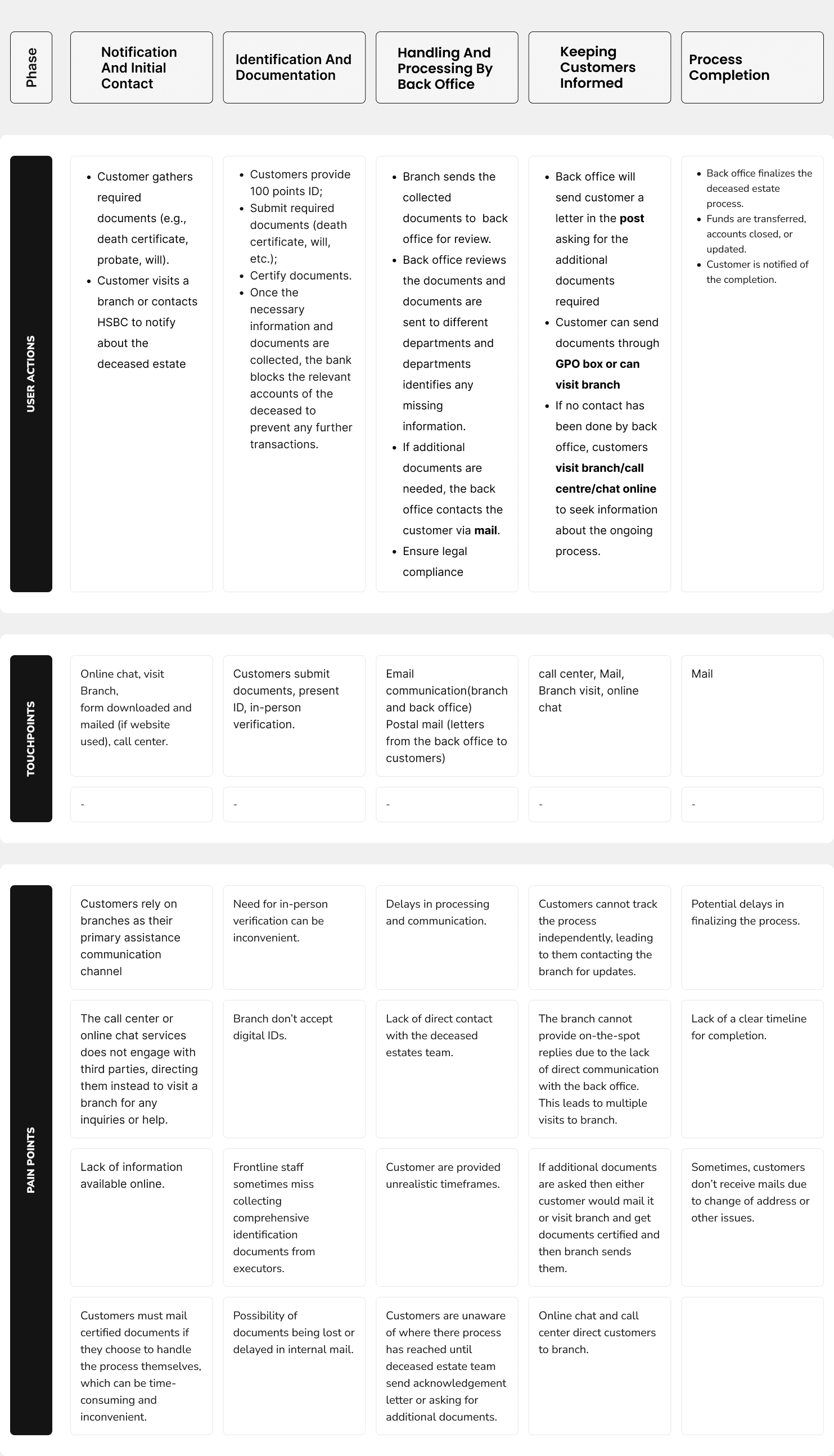
Customer Journey Map
I've crafted a journey map highlighting customer pain points in managing deceased estates, aiming to create a smoother, more compassionate experience.
Customer Journey Map
Mapping the Process…
Process Mapping
I mapped the process to identify:
What are the specific points in the process that cause the most delays and confusion?
What do frontline staff need to effectively assist in their roles within this process?
What technological aspects could be added to better serve the customers?
Recommendations…
My recommendations prioritized low-cost solutions and utilizing existing systems, followed by high-budget options.
01.
Problem
Frontline staff at HSBC’s deceased estates team face inefficiencies due to fragmented information access and communication delays.
Recommendation
Building on Existing G-way system which deceased team already uses.
What is the G-ways system?
The G-Ways system centralizes all files and documents related to deceased estates, ensuring efficient tracking and management by organizing information into specific queues. It stores and manages all documents, whether scanned or emailed, in one place. Additionally, the G-Ways system allows for sending and receiving emails within it, maintaining a continuous chain of communication. This eliminates the need to manually attach emails from external systems, keeping all communications stored together. Regardless of how information is received, such as through scanned documents or emails, it is processed and stored in the G-Ways system. This approach ensures consistency and easy accessibility of all relevant information related to deceased estates.
02.
Problem
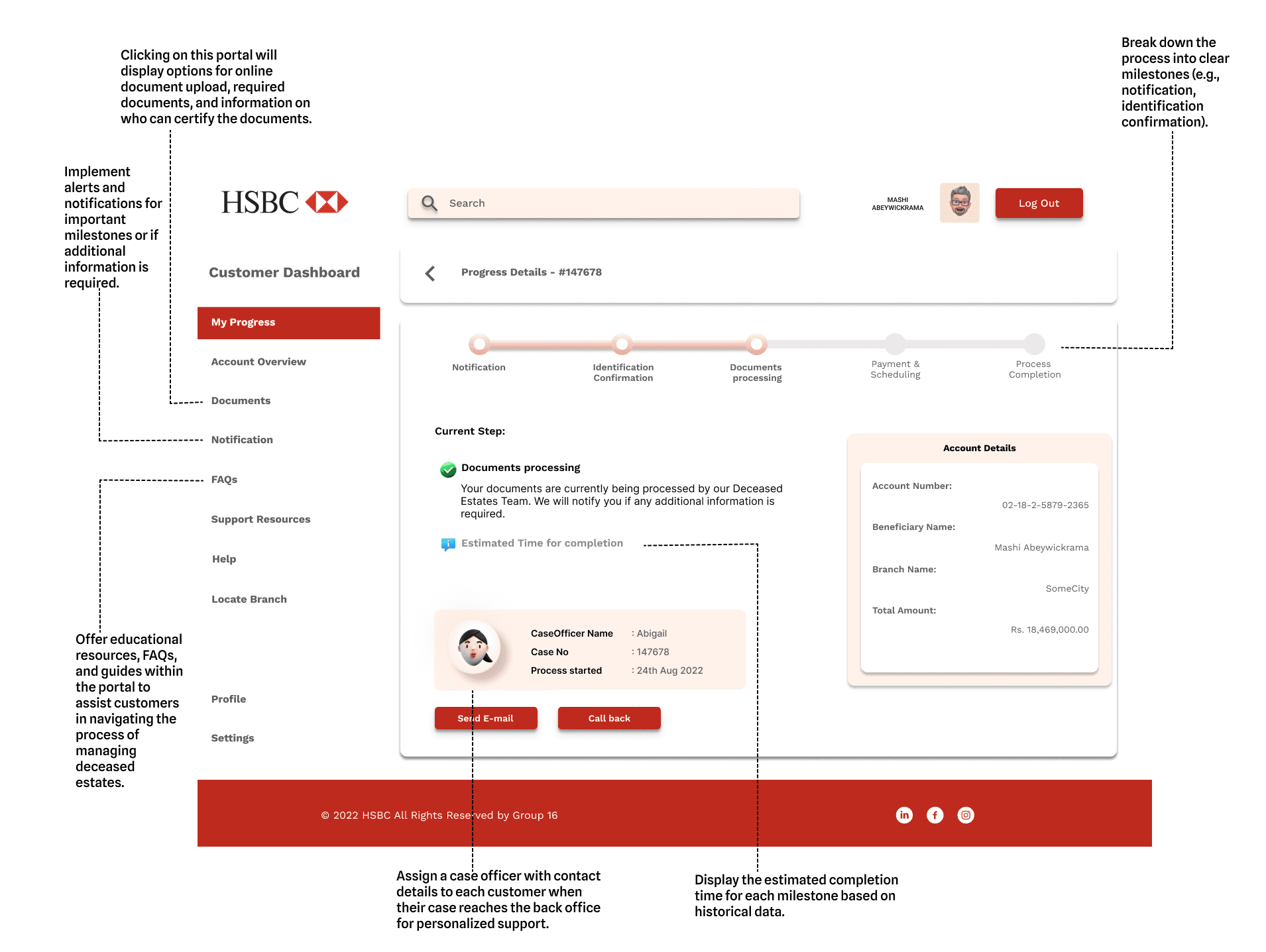
Customers lack a simple way to track their deceased estates case progress , leading to frustration and uncertainty.
Recommendation
Integrate a customer portal that allows real-time tracking of case progress. This portal should automatically update with the latest information from the case officer and back office. Additionally, breaking the process down into clear milestones and providing estimated completion times based on historical data will offer customers more transparency, reducing frustration and improving their overall experience.
Customer Portal
03.
Problem
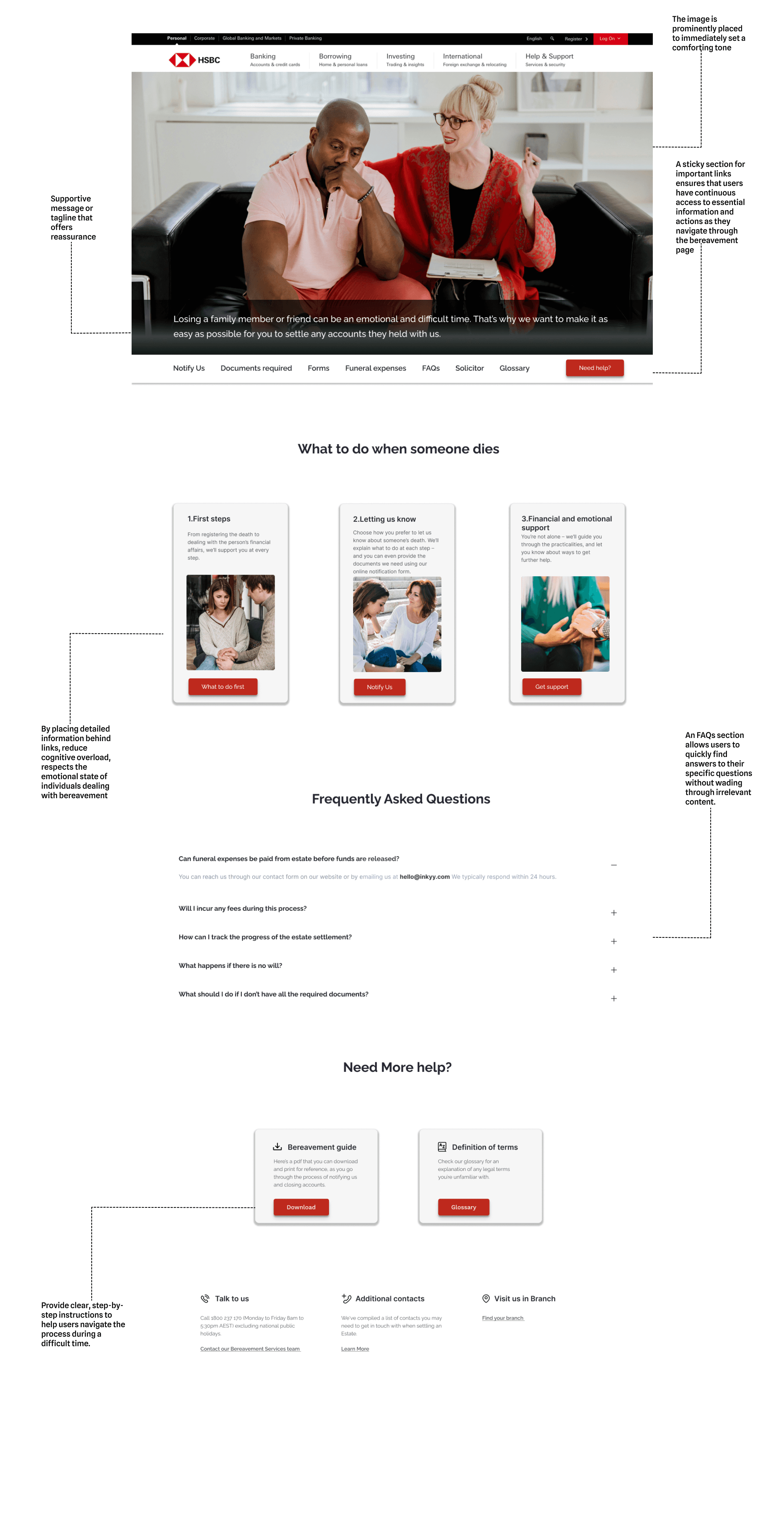
The bereavement page is confusing and lacks clear guidance, making it difficult for customers to complete tasks independently.
Recommendation
Redesign the bereavement page to provide a clearer, step-by-step guide for users. Organize information into easy-to-follow sections with well-labeled links.
Redesigning of HSBC-Bereavement page
04.
Problem
Frontline staff and call center agents lack the training and tools to effectively support customers managing deceased estates. Call center agents are unable to provide case-specific guidance due to limited access to detailed information, while frontline staff lack scenario-based, practical training to handle sensitive cases confidently. Existing materials like checklists are insufficient, leading to inconsistent customer experiences and increased stress during a challenging time.
Recommendation
Essential Training for Effective Deceased Estates Management.
Comprehensive Training Program
Create a training program that covers the bereavement process, focusing on empathetic communication, step-by-step guidance from document submission to resolution, clear timelines, and handling common scenarios effectively.
Scenario-Based Training
Implement training sessions that cover key scenarios, such as the steps that occur after documents are submitted to the back office and how to assist customers with account transfer requests.
Process update Training
Teach staff how to update the deceased estates process in branches, including changing account names and updating necessary fields.
Regular refresher courses
Conduct regular refresher courses to keep staff updated on any changes in the deceased estate process and reinforce their knowledge.
Call center staff Training
Train call center staff to offer step-by-step guidance to customers, minimizing the need to direct them to a branch. Ensure that call center staff have access to the same information and resources as branch staff, enabling them to assist customers effectively.
Key Learnings
Cross-Functional Collaboration
Working closely with different teams, such as customer service and legal, highlighted the need for collaboration in design. Understanding diverse perspectives leads to more holistic and effective solutions.
Designing for sensitive situations
Designing for sensitive situations, like bereavement, requires a deep understanding of the emotional needs of users. It's essential to balance empathy and efficiency, ensuring that the process is supportive for grieving customers while also making it easier for employees to manage delicate tasks.